Giving Back to the Communities that Support Us
Giving Back to the Communities That Support Us

At Brentnalls Western Victoria, giving back isn’t something we do occasionally, it’s part of who we are.


We’re proud to work closely with individuals, families and businesses across our region, and we believe it’s important to support the communities that support us. Through our Workplace Giving initiative, our team has the opportunity to contribute to causes that are meaningful to them, often those connected to their own families, friends and local networks.


What makes this initiative special is that it’s driven by our people. The causes we support aren’t chosen at a distance — they reflect real experiences, real stories, and real connections within our team.


In our most recent round of contributions, we were proud to support a number of important organisations making a difference in very different ways.

We made a donation to the Motor Neurone Disease Association of Australia, helping provide care, support and advocacy for individuals and families navigating the challenges of MND.

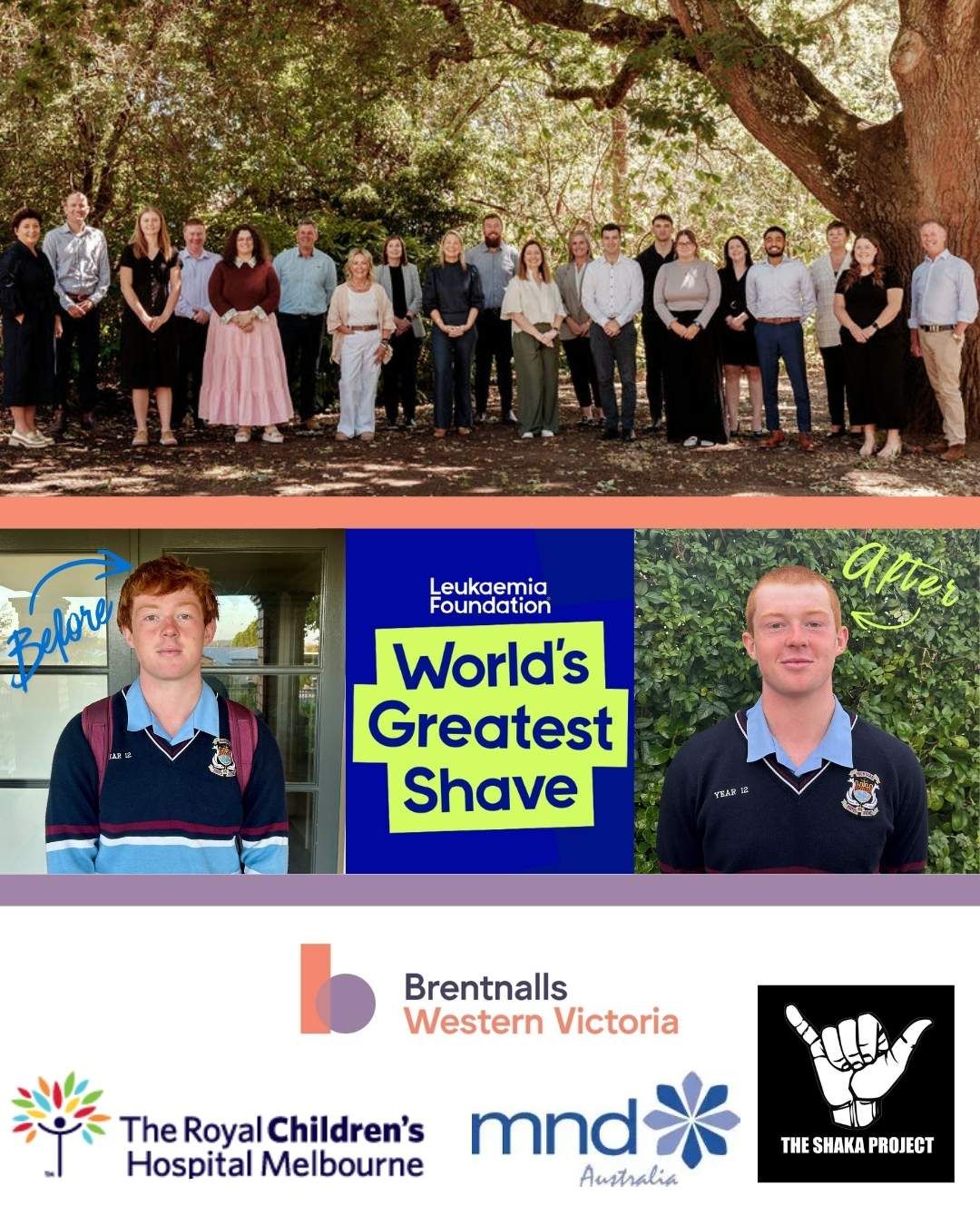
We also supported the World’s Greatest Shave — a cause that was particularly close to home this year. Erin’s son, Xavier (pictured above) took part in the campaign and was truly “brave for the shave,” shaving his head to raise funds and awareness for those facing blood cancer. It’s a powerful reminder of how small acts of courage can make a meaningful impact.


Our team also chose to support the Shaka Project, an organisation focused on strengthening youth mental health through connection, conversation and community. With growing awareness around mental health, particularly for young people, this is an area many of us feel strongly about.


In addition, we contributed to the Royal Children’s Hospital Melbourne, helping support the incredible work they do in delivering world-class care to children and their families.

While these contributions may seem small in isolation, together they reflect something much bigger - a shared commitment to looking beyond our day-to-day work and supporting the people and communities around us.


At Brentnalls Western Victoria, we believe strong communities are built through connection, care and contribution.

We’re proud to work alongside a team that not only cares about what they do, but also about the impact they can have.


November 24, 2026
From a focused problem solving session to a business health check or ongoing guidance, we can help you work through challenges and set practical priorities. Running a business means juggling profitability, people, systems and plans for the future, often all at once. Our trusted advisors work with you to cut through the complexity and focus on what will make the biggest difference. Common business challenges We help you work through challenges such as improving profitability and cash flow, managing people and building stronger teams, and getting the right systems and processes in place. We also help with planning for growth, making confident decisions, planning for succession or transition, and aligning owners or leadership teams. Our advisory services Business Health Checks: A focused session to understand your current position, identify opportunities and agree on the priorities that will make the biggest difference. Strategic Planning: A facilitated process to bring clarity and alignment, define your goals, identify the best path forward and create a one page business plan. Quarterly Business Reviews: Regular check-ins to review performance, track progress, address challenges and set new priorities, so you stay focused and accountable. Problem Solving Sessions: A focused session to work through a specific challenge or decision, with practical advice and clear next steps. Ongoing support For businesses that want consistent guidance and a trusted advisor by their side, we can provide you with support. Let's start the conversation Contact Erin White, Principal Business Manager, on 03 5571 0111 or at ewhite@brentnallswv.com.au .
November 24, 2026
Changes worth planning for now If you hold investments, operate through a family trust or are considering selling or transferring your business; upcoming tax changes deserve an early conversation. The relevant dates, income sources, and ownership arrangements can affect the outcome. Review your position before signing a contract or changing your structure. CGT reforms from July 2027 The government’s CGT reforms replace the flat 50% discount with inflation indexation and a 30% minimum tax on real capital gains from 1 July 2027, subject to exceptions and transitional rules. Treasury says gains accrued before that date retain the old discount treatment. The first stage of legislation is law; further implementation details have been the subject of draft legislation. The changes extend beyond investment property. If you are planning to sell shares, land or a business, talk to us about the rules that apply to your assets, what records you need, and how the transitional calculations may affect you. A sale is not the only transaction that can trigger CGT: transferring assets within a family can also have tax consequences. Proposed minimum tax on discretionary trusts Treasury has released draft legislation for a 30% minimum tax on certain discretionary trusts from 1 July 2028. This is a proposed future measure, rather than a current tax obligation. It may affect how income is taxed and distributed within family groups, so the final legislation and your particular arrangements will need to be considered. Treasury identifies an exemption for primary production income. That does not necessarily exempt every income stream in a farming family trust: rent, investment income and other activities may require separate consideration. Start by reviewing what your trust earns and how it is used. Seek advice before restructuring or transferring assets, as these steps can themselves create tax and duty costs. Small business concessions and farm succession Treasury says the four existing small business CGT concessions are being retained. It also outlines an increase in the turnover threshold for the 50% active asset reduction from $2 million to $10 million from 1 July 2027. These concessions remain subject to eligibility requirements; they are not automatic exemptions for every business or farm sale. If retirement, succession or a sale is on the horizon, review asset ownership, business use and the relevant concession conditions well before the transaction. Early planning gives you time to work through the tax implications alongside family goals and legal arrangements. Trust income allocated to a company The High Court’s Bendel decision found that the private company’s unpaid present entitlements to trust income were not loans for the purposes of section 109D of Division 7A. The ATO has published guidance on the decision’s implications. This does not mean every company loan or payment involving a trust is free of Division 7A consequences. If your trust allocates income to a company and retains the funds, speak with us before changing existing loan arrangements or repayments. Other provisions, including the trust distribution integrity rules in section 100A, can still require consideration. Sources: Treasury CGT and discretionary trust reform guidance; Treasury draft discretionary trust legislation; ATO Bendel decision impact statement. Information checked 7 October 2026.  Treasury CGT and trust reform overview Treasury proposed discretionary trust minimum tax ATO Bendel decision impact statement
November 24, 2026
Drawing on super while continuing to work Accessing super does not necessarily mean you must stop working. If you are a self-funded retiree, drawing a super income generally does not impose a cap on employment earnings. Age Pension and other means-tested payments have separate rules, so earnings can affect those entitlements. You must first meet a condition of release. Turning 65 generally allows access even if you continue working. Before age 65, access generally depends on meeting a condition of release, such as reaching preservation age and retiring, ceasing an employment arrangement after age 60, or commencing a transition to retirement income stream. Transition to retirement arrangements have different restrictions. Benefits from a taxed super fund are generally tax-free from age 60, while wages remain subject to the usual income tax rules. Check your circumstances before changing your work or super arrangements. Understanding account-based pensions  An account-based pension lets you draw regular income from your super once you are eligible. You can generally choose payment frequency and withdrawals, subject to minimum annual payment requirements and your fund's rules. The balance remains invested. Investment returns, fees and the amount you withdraw influence how long it lasts, so it is not a guaranteed lifetime income. Tax treatment and any effect on government benefits also depend on your circumstances. We can help you understand the tax implications and work with your licensed financial adviser where personal retirement income or investment advice is needed. This information is general in nature and does not take into account your personal objectives, financial situation or needs. Before acting on any information, consider its appropriateness to your circumstances and seek professional advice where required.
More Posts